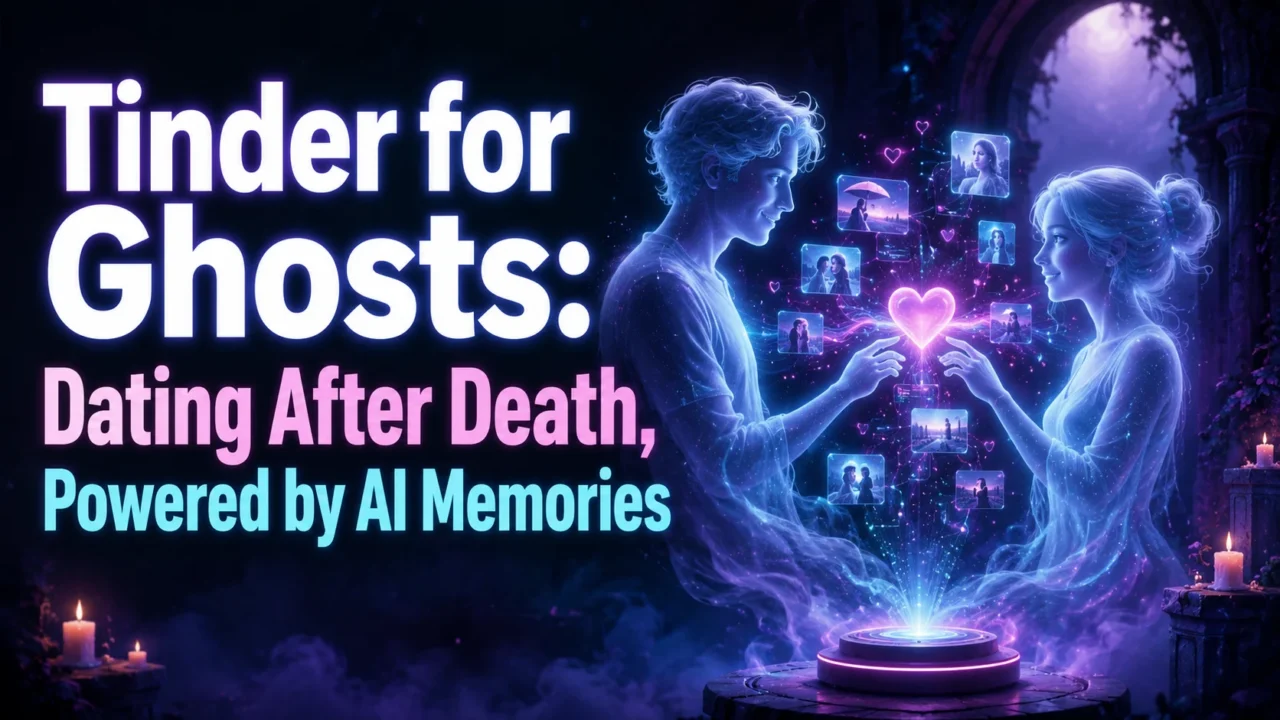
Tinder for Ghosts: Dating After Death, Powered by AI Memories
The Idea
Imagine a dating app where dead people continue as AI personalities built from old messages, photos, voice notes, and stories.
It sounds absurd, but it points to a real future question: what happens when a person’s digital footprint can imitate them after death?
The literal ghost-dating version is fiction. The AI memory version is much closer and much more uncomfortable.
What’s Blocking It?
The main blocker is consent.
AI can imitate a person, but that does not mean the person is alive, aware, or willing to be represented. This touches grief, identity, family rights, emotional manipulation, and digital ownership.
If built carelessly, it could hurt people who are already vulnerable.
The Closest Real Version Today
The closest versions today are AI companion apps, memorial chatbots, voice cloning, digital avatars, and fictional roleplay platforms.
These can simulate a personality or style, but they are not real afterlife communication.
Could This Become a Real Startup?
The literal idea should stay fictional.
A responsible version could become a memorial storytelling product with clear consent, family controls, and strong limits. Another safer version could be fictional AI characters in an afterlife-themed entertainment world.
The idea is more useful as a debate about digital identity than as a direct dating product.
When could this become real?
Pick your best estimate and compare it with the community.
Start the discussion