
Memory Backup: Save Your Best Moments Before Your Brain Forgets Them
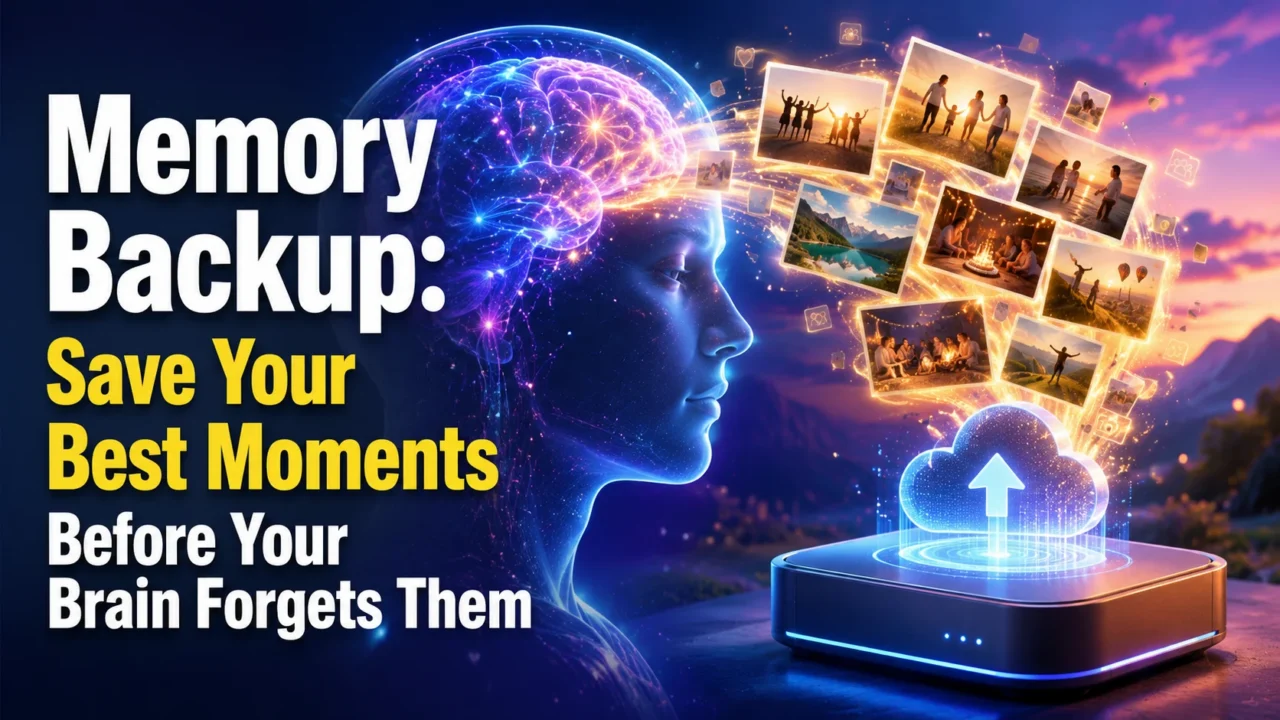
The Idea
Photos show what a moment looked like. Videos show what happened.
This idea tries to preserve more: the place, the voices, the story, the emotions, and the details that normally fade over time.
Imagine saving a wedding day, a child’s first words, a final conversation, or a major personal win in a way that feels closer to revisiting the moment than opening a photo album.
What’s Blocking It?
Human memory is not a clean recording.
It changes over time, mixes with emotion, and often becomes less accurate each time we remember it. Capturing the true feeling of a memory is much harder than storing media files.
There is also a large privacy risk. If memories can be stored, they can be copied, edited, leaked, or used against someone.
The Closest Real Version Today
The closest versions today are photo libraries, video archives, journaling apps, voice notes, family history tools, lifelogging devices, and AI memory assistants.
These tools can organize life data, but they do not preserve the inner experience of a memory.
A near-term version would be a better life archive, not a true brain backup.
Could This Become a Real Startup?
A practical version could become a strong consumer product.
The first version could combine photos, videos, voice notes, locations, messages, and written stories into private interactive memory timelines.
The long-term version may involve brain data, but the immediate opportunity is helping people preserve life moments before they are lost.
When could this become real?
Pick your best estimate and compare it with the community.
Start the discussion